



An Austrian Developer Built a Weekend Project. It Broke the Internet.
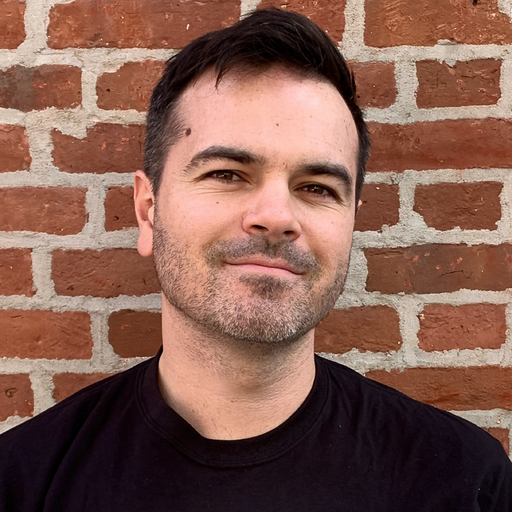
In November 2025, Peter Steinberger - an Austrian developer best known for his iOS work - published a small open-source project called Clawdbot. The idea was simple: a locally running AI agent that connects to your messaging apps and does things for you. Not a chatbot that answers questions. An agent that sends emails, manages your calendar, runs terminal commands, and remembers what you told it yesterday.
Within 72 hours of going viral in late January 2026, the project had 60,000 GitHub stars. By March 3, it crossed 250,000 - surpassing React as the most-starred software project on GitHub. React took over a decade to reach that milestone. OpenClaw did it in roughly 60 days.
We have been watching this space closely since we started OneWave AI, and we do not say this lightly: OpenClaw is the most significant open-source AI project since LLaMA. If you work with businesses that use AI - or if you are a business considering AI - you need to understand what OpenClaw is, what it is not, and why it matters. If you are still getting oriented on what AI agents actually are, our guide to AI agents covers the fundamentals.
OpenClaw is not a chatbot with a fancy name. It is a locally running AI agent that connects to your messaging platforms, executes real-world tasks, and maintains memory across sessions. That distinction matters more than most people realize.
The Name That Changed Three Times
The naming saga is worth understanding because it tells you something about how fast this space moves. Steinberger originally named the project "Clawdbot" - a playful nod to Anthropic's Claude model, which he used for the agent's reasoning. The "claw" became a lobster-themed brand identity that the community embraced immediately.
On January 27, 2026, Anthropic's legal team contacted Steinberger about the phonetic similarity between "Clawd" and "Claude." Rather than fight it, Steinberger renamed the project to "Moltbot" - leaning into the biology metaphor of a lobster molting its shell. Three days later, on January 30, he renamed it again to "OpenClaw" because, as he put it, "Moltbot never quite rolled off the tongue."
The double rename spawned a wave of impersonation campaigns exploiting the confusion. Malicious packages appeared under all three names. It was an early signal that OpenClaw's popularity would bring security challenges alongside the enthusiasm. We wrote about the broader distinction between chatbots and agents in our chatbot vs AI agent breakdown - and OpenClaw sits firmly on the "agent" side of that divide.
What OpenClaw Actually Does
At its core, OpenClaw is an autonomous AI agent framework that runs on your local machine - a Mac Mini, a VPS, or any always-on computer. It connects to messaging platforms like WhatsApp, Telegram, Discord, Slack, Signal, and iMessage. You talk to it through those apps. It talks back. But unlike a chatbot, it does not just respond with text. It takes action.
The architecture has several key components. First, it uses LLMs for reasoning - Claude, DeepSeek, GPT models, and others. The user picks the model. Second, it connects to real-world tools: email, calendar, file systems, terminal, web browsers. Third, it maintains persistent memory across sessions through a HEARTBEAT.md file that defines scheduled tasks and context. Fourth, it supports a plugin ecosystem called ClawHub where developers share and monetize pre-built agent skills.
The practical result is that you can message your OpenClaw agent on WhatsApp and say "check my email for anything urgent, summarize it, and block two hours on my calendar tomorrow morning to deal with it." The agent does all of that. No tab switching. No copy pasting. No manual steps.
Steinberger has described OpenClaw as "the shift to agentic AI" - a distinction from the conversational AI that most people associate with tools like ChatGPT. That framing resonated. It is also the framing we use with our clients: the value is not in the conversation. The value is in the execution.
OpenClaw vs Claude Code vs Manus
We get asked constantly how OpenClaw compares to the tools we already use. The short answer: they are different tools for different jobs. The long answer requires a table.
| Dimension | OpenClaw | Claude Code | Manus |
|---|---|---|---|
| Primary purpose | Always-on personal/business agent | Agentic software development | Cloud-based task automation |
| Where it runs | Local machine (self-hosted) | Terminal (your machine) | Cloud (vendor-hosted) |
| User interface | WhatsApp, Telegram, Slack, Discord | CLI / terminal | Web browser |
| LLM flexibility | Any model (Claude, GPT, DeepSeek) | Claude models only | Proprietary routing |
| Always-on capability | Yes (HEARTBEAT scheduling) | No (session-based) | Limited (credit-based) |
| Open source | Yes (fully open) | Partially (SDK open, runtime closed) | No (closed source) |
| Enterprise security | Minimal (community-driven) | Strong (Anthropic security team) | Moderate (cloud controls) |
| Cost model | Free + LLM API costs | Claude Max or API usage | $39-199/month subscription |
| Best for | Automation, communication, scheduling | Building and shipping software | Research, web tasks, form filling |
The key insight is that these tools are complementary, not competing. We use Claude Code to build software. We use OpenClaw for always-on automation that runs after the software is deployed. Manus fills a niche for one-off web research and browser-based tasks. The comparison that actually matters is not "which one is best" but "which one fits which job." As one DataCamp analysis put it: "Comparing them is like comparing a Swiss Army knife to a surgical scalpel."
Why Open Source Matters Here
The fact that OpenClaw is fully open source is not a minor detail. It is the reason it went viral. Developers do not trust closed-source AI agents that run on their machines with access to their email, calendar, and terminal. Open source means you can audit every line of code. You can verify that your data stays local. You can fork it and customize it for your specific needs.
On February 14, 2026, Steinberger announced he was joining OpenAI - a move that surprised many given that OpenClaw was built on Claude. But the project itself is moving to an independent open-source foundation and will remain fully open. OpenAI committed to sponsoring the project and letting Steinberger continue his work on it. The community watched closely for any signs of enshittification. So far, none have materialized.
For businesses, the open-source angle matters for a specific reason: vendor lock-in is the number one risk we warn clients about. If you build workflows on a closed platform and that platform changes pricing, gets acquired, or shuts down, you are stuck. With OpenClaw, the worst case is that you fork the project and maintain it yourself. That is a dramatically better position than most SaaS dependencies. We covered this dynamic in depth in our piece on building your first AI agent.

The Security Conversation Nobody Wants to Have
We would be doing you a disservice if we did not address security head-on. OpenClaw runs locally with access to your email, files, terminal, and messaging accounts. That is an enormous attack surface. Security researchers have raised concerns about the platform's attack surface, and Microsoft's security blog described the platform as requiring "fully isolated deployment" for enterprise evaluation.
Eight critical CVEs were disclosed in a six-week period. Over 30,000 OpenClaw instances were found exposed on the public internet. The ClawHub marketplace - the plugin ecosystem - was hit by a malware campaign where security researchers identified malicious skills containing embedded reverse shells.
This does not mean OpenClaw is unusable. It means it is not enterprise-ready out of the box. If you are a developer running it on a personal machine for personal automation, the risk profile is manageable. If you are deploying it across a team with access to client data, you need to treat it like any other piece of infrastructure: isolate it, monitor it, and restrict its permissions.
Our Assessment
We are not going to pretend we have all the answers on OpenClaw. The project is barely four months old. The ecosystem is evolving weekly. But here is where we stand as of early February 2026:
OpenClaw is real. This is not another AutoGPT hype cycle. The agent actually works. The community is building meaningful integrations. The growth trajectory is unprecedented in open source.
It fills a gap that Claude Code does not. Claude Code is our primary development tool and we are not replacing it. But Claude Code is session-based. It runs when you run it. OpenClaw is always-on. It runs while you sleep. Those are fundamentally different capabilities, and businesses need both.
Security is a real concern. We are not deploying OpenClaw in client environments without significant hardening. The open-source community is working on it, But today, it requires careful configuration to run safely.
The marketplace is the real story. ClawHub - the plugin marketplace - is where the long-term value lives. We will cover this in depth in our next post.
OpenClaw is not replacing Claude Code in our stack. It is extending it. Claude Code builds. OpenClaw automates. Together, they cover the full lifecycle from development to always-on production agents. That is the combination we are betting on.
We are going to keep writing about OpenClaw as the ecosystem matures. The rate of change is extraordinary - the project has drawn comparisons to ChatGPT from industry observers, and the ecosystem continues to expand rapidly. This is not slowing down. If anything, it is accelerating.
If you want to understand how AI agents fit into your business before diving into specific tools, start with our chatbot vs AI agent explainer. If you are ready to build, our guide to building your first agent gives you the practical blueprint. And if you want help figuring out where OpenClaw fits in your stack, that is what we do. Reach out.