




The Work That Eats Your Week
If you work in finance, you already know the drill. Monday is the weekly cash flow report. Tuesday is chasing variance explanations from department heads. Wednesday is updating the forecast model because someone changed an assumption. Thursday is preparing the board deck. Friday is reconciling data across three systems that should talk to each other but do not.
At OneWave, we have worked with CFOs, controllers, and finance teams across industries, and the story is remarkably consistent: most of their week is spent on work that is necessary but not strategic. Pulling data, formatting reports, chasing numbers, reconciling discrepancies. The analysis - the actual thinking that drives business decisions - gets squeezed into whatever time is left.
Claude changes that equation. Not by replacing financial judgment - that is the part humans are irreplaceable for - but by automating the mechanical work that prevents finance teams from exercising that judgment as often as they should. If you are new to Claude and want a broader overview before diving into finance-specific workflows, start with our practical guide to Claude AI for business.
Here is how we deploy it, level by level.
Chat: Your Financial Analysis Companion
Claude Chat is the quickest win for any finance professional. No setup, no integration, no learning curve beyond typing a question. Open a conversation and start working.
P&L Analysis and Anomaly Detection
Paste your P&L statement into Claude - the raw numbers, not a screenshot - and ask it to flag anomalies. "Revenue is up 12% but COGS increased 23%. Why might that be?" Claude will not know the answer to your specific situation, but it will generate hypotheses that a busy controller might miss at 6 PM on a Friday: vendor price increases, product mix shift, one-time procurement costs, timing differences in recognition. Think of it as a second set of eyes that never gets tired and never skips a line item.
Board Report Drafting
Give Claude the raw data and the narrative context. "Revenue was $2.4M, up from $2.1M last quarter. The growth was driven primarily by enterprise deals. Two large deals closed in the final week of the quarter." Ask Claude to draft the board-ready narrative with the right tone: confident but not hyperbolic, honest about headwinds, forward-looking on strategy. The first draft gets you 80% there. You spend your time refining rather than staring at a blank page.
Explaining Finance to Non-Finance Stakeholders
The VP of Engineering asks why the budget is frozen. The CEO wants to understand the cash conversion cycle. The sales team does not understand why their commission structure changed. Paste the financial concept and ask Claude to explain it in terms a non-financial person would understand, with a specific analogy relevant to their role. This translation work is constant in finance, and Claude handles it remarkably well.
Contract Review for Financial Terms
Paste a vendor contract or customer agreement and ask Claude to identify every financial term: payment schedules, penalty clauses, auto-renewal terms, rate escalation language, audit rights, termination fees. Claude will not replace your legal review, but it will flag the financial exposure in minutes instead of the hour it takes to read a 30-page contract line by line.
Scenario Modeling
"What happens if revenue drops 15% next quarter while headcount stays flat?" Give Claude your current numbers and ask it to model the scenario. It will walk through the impact on burn rate, runway, margin, and cash position. It is not a replacement for a proper financial model, but for quick directional analysis in a meeting or on a call, it is faster than opening a spreadsheet.
A CFO we work with told us: "I used to spend Monday morning building the weekly cash flow report. Now Claude has it ready before I finish my coffee."
Cowork: Where Finance Teams Save Days, Not Hours
Cowork is the product that transforms Claude from a thinking partner into a working partner for finance teams. Instead of pasting data into a chat window, you hand Claude actual files and ask it to process them. The difference is enormous.
Automated Monthly Close Reporting
Export your trial balance, revenue detail, and expense categorization files. Give them to Cowork along with your report template. Claude will process the data, populate the template, calculate the key metrics, and generate the narrative commentary. A controller we work with reduced her monthly close reporting from 8 hours to 90 minutes. She still reviews every number - that is her job - but the mechanical assembly is handled.
Variance Analysis Reports
Give Cowork your budget file and your actuals file. Ask it to produce a variance report with explanations for every line item that deviates more than 5% from plan. Claude will identify the variances, calculate the dollar and percentage differences, and generate preliminary explanations based on the data patterns. Your job shifts from building the report to validating and enriching the explanations.
Budget vs. Actual Summaries
Every department head needs a budget vs. actual summary tailored to their cost center. Give Cowork the master data and ask it to generate individual summaries for each department. What used to be an afternoon of copying, filtering, and formatting becomes a single request that produces all the summaries at once.
Investor Update Drafts
Upload your raw financials, key metrics, and recent milestones. Cowork will generate an investor update draft that hits the standard sections: financial summary, key metrics, product updates, team updates, and asks. The tone is professional, the numbers are accurate, and the narrative connects the dots between data points. You edit for voice and strategic emphasis. The structure and data assembly are done.
Cross-Spreadsheet Reconciliation
This is the task that makes finance people age prematurely. Two spreadsheets that should match but do not. Give both files to Cowork and ask it to identify every discrepancy: mismatched amounts, missing entries, duplicate transactions, different categorizations. Cowork will produce a reconciliation report that lists every difference with the specific row and amount. A client's accounting team told us this saved them 6 hours per month on bank reconciliation alone.
The finance teams that get the most from Cowork are the ones who map their monthly calendar of deliverables and systematically automate each one. Start with the report that takes the most hours.

Code: For Finance Leaders Who Want to Build
Claude Code is where finance automation moves from task-level to system-level. This is for CFOs with technical aptitude, FP&A leaders who know what they want to build, and finance operations teams that are ready to create infrastructure rather than just process files.
Automated Invoice Processing
Build an agent that receives invoices via email, extracts the relevant data (vendor, amount, due date, line items, PO number), validates it against your purchase orders, flags discrepancies, and routes approved invoices for payment. A client of ours processes 200+ invoices per month. Their agent handles the vast majority end-to-end with no human intervention. The rest are flagged for review with specific notes on what needs attention.
Real-Time Financial Dashboards
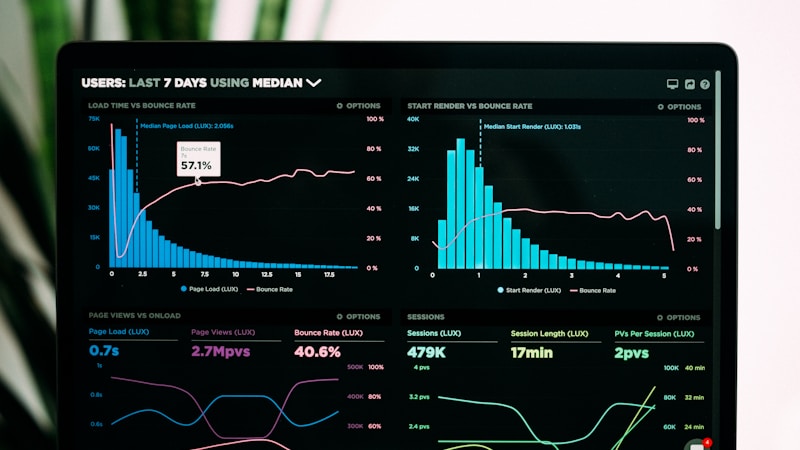
Connect Claude Code to your accounting software via MCP servers and build dashboards that update automatically. Cash position, accounts receivable aging, revenue by segment, expense tracking against budget - all pulling live data and refreshing on schedule. No more exporting CSVs and building pivot tables. The data is always current and the visualizations are always ready.
AP/AR Workflow Automation
Build agents that manage the entire accounts payable and accounts receivable cycle: invoice intake, approval routing, payment scheduling, collections follow-ups, cash application. Each step is automated with human checkpoints at the right moments. The goal is not to remove humans from the process - it is to remove the manual data entry and chasing that makes AP/AR work so mind-numbing.
Custom Forecasting Models
Build forecasting systems that incorporate your specific business drivers, not the generic models your planning software provides. Feed in historical data, market indicators, pipeline data, and seasonal patterns. The agent builds and maintains the model, updates it with new data as it arrives, and flags when actuals deviate significantly from projections. This is FP&A infrastructure that would normally require a data engineering team.
The CFOs who build with Claude Code are not replacing their finance teams. They are giving their teams superpowers - turning a five-person finance department into one that operates like a fifteen-person department.
A Note on Compliance
We would be irresponsible not to address this. Finance data is sensitive. Regulatory requirements are real. Here is how we think about AI in finance from a compliance perspective.
- Data classification matters. Know what you are putting into Claude. Anthropic's data retention policies are clear, and Claude does not train on your data. But your internal policies may have restrictions that go beyond what the vendor allows. Understand your own rules before you start. Our guide to AI data privacy covers this in detail.
- Human review is non-negotiable. Claude generates drafts, surfaces anomalies, and processes data. A human signs off. Every time. No exceptions. This is not a limitation of the tool - it is how responsible finance teams should operate regardless of the tool.
- Audit trails are essential. If you are building with Code, build logging into every agent from day one. Every action the agent takes should be recorded, timestamped, and reviewable. This is not optional for finance workflows.
- Start with low-risk workflows. Report generation, data formatting, and analysis summaries are safe starting points. Payment processing and regulatory filings require more careful implementation and more robust human oversight.
Where to Start
If you are an individual contributor in finance, start with Chat. P&L analysis, report drafting, and scenario modeling are the fastest wins. You will see the value in the first session.
If you are a finance manager or controller, move to Cowork. Monthly close reporting and variance analysis are the workflows that deliver the most dramatic time savings. Map your monthly deliverables, identify the ones that take the most hours, and automate them in order.
If you are a CFO or FP&A leader, explore Code. Start with a single automation - invoice processing or dashboard building - and expand from there. The compound effect of automating finance operations is one of the highest-ROI applications of AI we have seen across any function.
Chat is where you start. Cowork is where most finance professionals should live. Code is for the leaders who want to build the finance operations infrastructure of the future. For a deeper look at all three tiers, see our complete guide to Claude Chat, Cowork, and Code. Find your level, start this week, and measure the hours you get back.
If any of this resonated, we are easy to reach.