




Not Every Business Is Ready. But You Might Be Closer Than You Think.
We get the same question every week: "Is my business ready for AI?" And every week, we give the same honest answer - it depends. Not on your budget. Not on your technical sophistication. It depends on whether your business has the right kind of problems.
After working with SMBs across dozens of industries, we have identified five signals that reliably predict whether AI adoption will actually stick and deliver ROI - or whether you would be better off fixing other things first.
If you recognize three or more of these in your own operation, you are not just ready. You are leaving money on the table every day you wait.

1. Your Best People Are Doing Your Worst Work
You hired Sarah because she is brilliant at client relationships. She closes deals nobody else can close. But right now, Sarah spends three hours every morning copy-pasting data from your CRM into spreadsheets so she can build pipeline reports for the weekly meeting.
Sound familiar?
This is the single clearest signal. When talented, expensive employees are burning hours on tasks that follow predictable patterns - reformatting reports, categorizing emails, entering data between systems, reconciling records - you are paying premium rates for commodity work.
If a task could be described as a detailed flowchart, an AI can probably do it. And your team can go back to doing what you actually hired them for.
We worked with a property management company where an office coordinator spent 15 hours a week - nearly half her time - manually entering maintenance requests from emails into a tracking system, then routing them to vendors. An AI agent now reads those emails, extracts the details, creates the ticket, and notifies the right vendor. The coordinator did not lose her job. She started handling tenant relations, which is what she wanted to do in the first place.
The value is not just time saved. It is the error reduction. Humans doing monotonous work for hours make mistakes. That is not a character flaw. It is biology. AI does not get bored at hour three. If you want to understand exactly how these AI agents work and why your business needs one, we break it down in a separate post.
2. Growth Is Breaking Your Operations
This one hurts because it is a good problem disguised as a crisis. You are winning more business than your team can handle. Customer wait times are creeping up. Onboarding new clients takes so long that some of them churn before they even get started. You are turning down work because you literally cannot process it fast enough.
The traditional answer is "hire more people." And sometimes that is right. But there is a math problem hiding in that answer.
Hiring takes months. Training takes more months. Each new hire adds management overhead. And when the work is fundamentally repetitive - processing orders, generating reports, responding to routine inquiries - you are just adding more humans to do more commodity work.
A well-configured AI system scales from 10 tasks a day to 10,000 without a proportional increase in cost. We helped a marketing agency that had the pipeline to double their client base but could not produce reports and proposals fast enough. AI now drafts initial reports from raw data and generates customized proposal templates. Their team focuses on strategy and client relationships. They doubled revenue in eight months without doubling headcount.
If your growth is bottlenecked by throughput on repetitive tasks, AI is not a nice-to-have. It is the difference between scaling and stalling.
3. You Are Sitting on Data You Never Use
Pull up your CRM. How many customer records are in there? Now ask yourself: when was the last time anyone analyzed that data to find a pattern? To predict churn? To identify your most profitable customer segment?
Most businesses are drowning in data they never touch. Three years of sales transactions. Thousands of support tickets. Website analytics going back to 2019. Every email exchange with every customer. It all sits there, costing money to store and delivering zero insight.
This is AI's sweet spot. A retail client of ours had years of point-of-sale data that nobody had ever looked at beyond the monthly revenue number. We pointed an AI at it and within days had identified purchasing patterns, seasonal demand shifts, and customer segments that were invisible to the naked eye. They restructured their inventory ordering and reduced stockouts by 40%.
The caveat: your data needs to be reasonably accessible. If everything lives in disconnected spreadsheets with inconsistent formatting, you will need to invest in cleanup first. You will also want to understand what small businesses need to know about AI data privacy before feeding sensitive data into any system. But if you have data in a CRM, an ERP, or even well-maintained spreadsheets, you are sitting on a goldmine.
4. Your Competitors Are Already Moving
We are not talking about keeping up with trends for the sake of appearances. We are talking about concrete market dynamics that affect your revenue.
Here is a scenario we see constantly. A prospect is comparing two similar companies. One responds to their inquiry in 45 seconds with a personalized, relevant message. The other takes four hours to send a generic template. The prospect does not think "Oh, Company A must be using AI." They think "Company A cares about me more." And they sign with Company A.
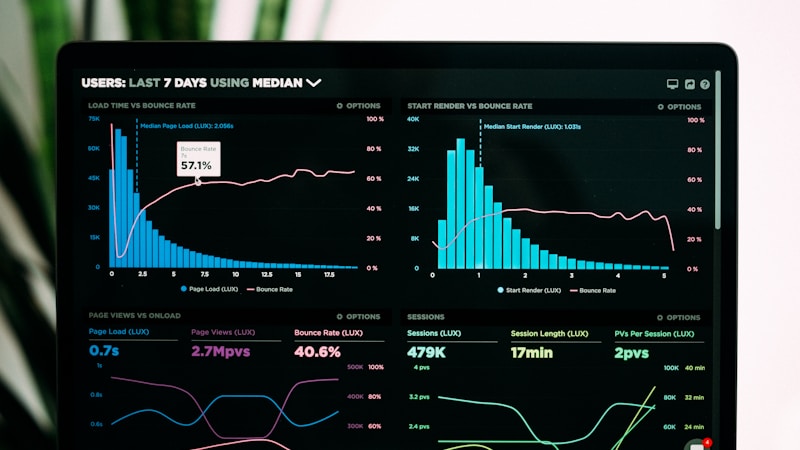
In sectors like financial services, logistics, real estate, and e-commerce, AI adoption among SMBs has accelerated dramatically. Companies using AI-powered customer support are resolving inquiries in minutes instead of hours. Businesses using AI for pricing optimization are capturing margin that manual analysis simply cannot see.
When your competitors are using AI and you are not, the technology gap becomes a revenue gap. It does not show up on a dashboard. It shows up as deals you never knew you lost.
At OneWave, a significant portion of our work is helping SMBs close this gap - deploying the same caliber of AI solutions that larger competitors have had for years, but tailored to SMB budgets and realities. If you are not sure where you stand, book a free AI readiness assessment and we will walk through these signals with your team.
5. Your Team Is Already Experimenting
This is the one most leaders overlook, and it might be the most important signal of all.
Walk around your office - or your Slack channels - and pay attention. Is anyone using ChatGPT to draft emails? Is someone feeding meeting notes into Claude to get summaries? Has a team member built a personal workflow using AI that their colleagues do not even know about?
If so, you have something invaluable: organic demand. Your people are already telling you they want better tools. They are voting with their time.
The readiness signals are unmistakable:
- Team members experimenting with AI tools on their own, using personal accounts to get work done faster.
- Managers who complain about current tools and actively look for alternatives.
- A culture where people suggest process improvements without being asked.
- Past technology adoptions that went smoothly - your team has the muscle memory for change.
On the flip side, if your team views every new tool with suspicion and change initiatives die on the vine, AI adoption will be an uphill battle. That does not mean you should abandon the idea. It means you start smaller: pick your two most enthusiastic team members, give them a focused pilot, let them succeed visibly, and let the results do the convincing.
  AI READINESS SCORECARD
  ──────────────────────────────────────────────────────────────

  Rate each sign 0-2:  0 = Not us   1 = Somewhat   2 = Definitely

  [ ] 1. Best people doing worst work              ___  / 2
        (Skilled staff stuck on repetitive tasks)

  [ ] 2. Growth is breaking operations              ___  / 2
        (Scaling bottlenecked by manual throughput)

  [ ] 3. Sitting on unused data                     ___  / 2
        (CRM, sales, or support data going unanalyzed)

  [ ] 4. Competitors are already moving              ___  / 2
        (Rivals responding faster, pricing smarter)

  [ ] 5. Team is already experimenting               ___  / 2
        (Staff using ChatGPT, Claude, or other AI on their own)

  ──────────────────────────────────────────────────────────────
                                          TOTAL:   ___  / 10

  SCORING:
  8-10  -->  High readiness. You are leaving money on the table.
  5-7   -->  Moderate readiness. Start with a focused pilot.
  2-4   -->  Early stage. Fix foundational issues first.
  0-1   -->  Not yet. Focus on process and data basics.
The Math Is Simple
If you saw your business in three or more of these signs, you are past the "should we?" stage. You are in the "every month we wait costs us" stage.
The cost of inaction compounds. Your competitors get further ahead. Your team burns out on work that machines should be doing. Your data sits idle. The gap between where you are and where you could be widens every quarter.
AI readiness is not about having perfect infrastructure or a data science team. It is about having real problems that AI can solve, data to work with, and people willing to try something new.
The practical next step is not to overhaul everything. Identify your single highest-impact opportunity from the signs above. Figure out what a solution would look like. Run a focused pilot. Measure the results. Then expand. We wrote a full guide on where to start with an AI strategy for SMBs that walks through this process step by step.
If that sounds like where you are, the time to start was probably six months ago. The second-best time is today.